Essay
Cheap Technology, Expensive Money
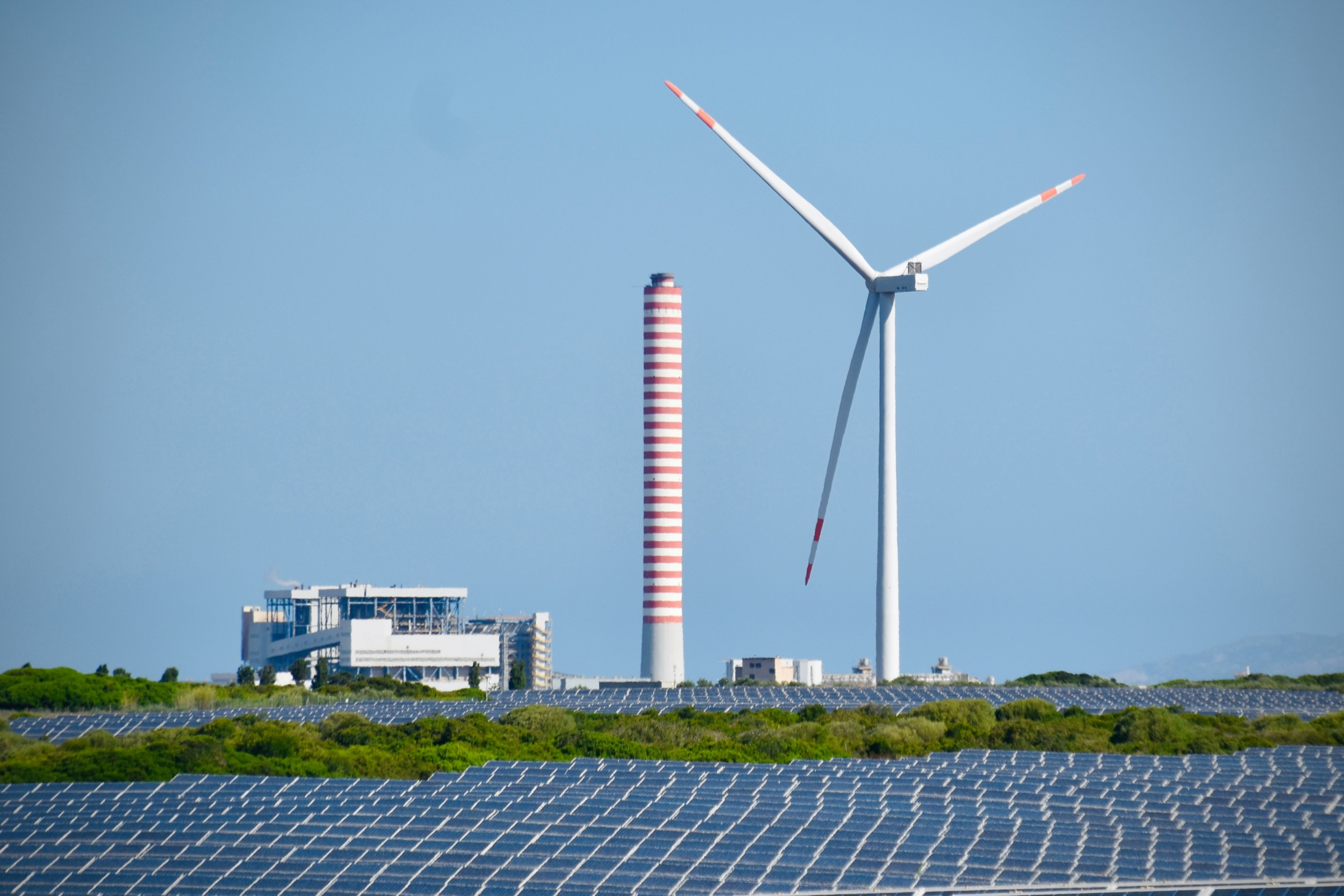
Renewable electricity has never been this cheap. According to the International Renewable Energy Agency (IRENA), 91% of newly commissioned utility-scale renewable capacity in 2024 delivered electricity at a lower cost than the cheapest new fossil-fuel alternative.1
Yet the build-out remains remarkably uneven. China alone accounted for nearly 64% of the renewable capacity added worldwide in 2024.2
If renewable energy is now the cheapest option, why is it not being built everywhere?
A solar panel placed in Kenya does not suddenly forget how to turn sunlight into electricity. A wind turbine does not become less aerodynamic when it is built in Argentina. Yet electricity generated by the same equipment can cost far more in one country than in another.
The answer is often hidden in the financing.
Anyone who has compared mortgage rates understands the basic problem.
Suppose you and your friend Jim each borrow $1 million to build identical solar projects. Both loans last 25 years. You qualify for a 5% interest rate. But Jim must pay 12%.
Under a simplified annual-payment calculation, your project owes about $71,000 a year. But Jim’s owes roughly $127,500, which is almost 80% higher.
Same equipment. Same location. Same sunshine. Very different electricity costs.
Energy projects are more complicated than this example. But the basic relationship holds: expensive financing leads to expensive electricity.
Another reason financing is so important is that solar and wind projects require most of their spending before they produce their first kilowatt-hour. This front-loaded cost structure makes affordable financing unusually important.
Existing fossil-fuel plants, on the other hand, may have been built decades ago. Much of their original construction cost is already sunk. They can continue operating by purchasing coal and paying their operating expenses over time. A replacement solar or wind project, however, must raise construction capital today. In that sense, coal comes with a pay-as-you-go fuel bill, while renewable energy resembles buying decades of fuel in advance. The renewable project may cost less over its lifetime, but it asks for more money at the beginning.
Coal replacement is usually described as a contest between an old coal plant and a new solar or wind project. Coal crossover analysis asks whether replacing an existing coal unit with new renewable generation would reduce costs. In our current Coal Crossover dataset, 4,822 of the 5,058 coal units with at least one comparable solar or wind alternative—about 95.3%—have a lower-cost renewable option under the baseline assumptions and before adding storage costs.3
That number does not mean 95.3% of coal units can shut down tomorrow. Storage, transmission, reliability, contracts, and local employment still matter. But it suggests that the main obstacle is no longer simply the price of solar panels or wind turbines.
Even when projects technically reach the crossover point, high financing costs can prevent countries from acting on it. This can be a major obstacle to global decarbonization. My experience working in energy investment banking taught me the importance of financing costs. High financing costs can kill a good project before it even begins.
For a country or developer facing an immediate electricity shortage and limited access to capital, the cheapest long-term option may still be the hardest one to finance. That is why the structure of the costs matters almost as much as their total.
It is therefore frustrating that financing conditions differ so sharply between countries.
The International Energy Agency (IEA) estimates that financing represented roughly half of the levelized cost of solar electricity in emerging and developing economies in 2021. In advanced economies and China, the corresponding share was about 25% to 30%. The IEA also found that the cost of capital for a typical solar project was two to three times higher in many emerging economies.4
Admittedly, these differences do not come from nowhere. Investors worry about inflation, currency depreciation, regulatory instability, delayed payments from electric utilities, and whether long-term contracts will be honored. Some of these risks are real. Others may be overpriced because investors have limited information or little experience in a particular market. Either way, the cost is added to the project.
This creates a cruel mismatch. Many developing countries have excellent renewable resources and rapidly growing electricity demand. They are also frequently asked to pay the highest price for capital. The places that most urgently need new electricity may therefore face the most expensive path to building it.
Researchers call this a climate investment trap.5 High perceived risk raises financing costs. Expensive financing discourages investment. Weak investment slows development and the energy transition. The resulting economic and climate instability can then make investors perceive even more risk.
The trap feeds itself.
Can governments make financing cheaper?
Not exactly. Governments cannot wave a wand and make risk disappear. Investors are not fools, and power plants cannot run on goodwill.
Governments can, however, change how specific risks are managed.
A long-term power purchase agreement can make future revenue more predictable. A loan guarantee can protect lenders against clearly defined losses. Development banks can offer longer-term debt, while currency hedging can reduce exchange-rate exposure. Public funding can take on risks that private investors are unable or unwilling to bear.
But none of this is free. A government guarantee moves risk onto the public balance sheet. A subsidized loan for an energy project could instead have supported a hospital, a school, or another public priority. Poorly designed support may reward investors for projects they would have financed anyway. It is a trade-off that governments need to consider.
The falling price of renewable technology is one of the great economic developments of the past two decades. But a cheap solar module is not the same thing as cheap solar electricity.
Electricity prices depend on where projects are built, who finances them, what risks they face, and who agrees to bear those risks. The technology may be global. The price of money remains local.
But this also gives us a reason to be optimistic. We have already developed many of the technologies needed to decarbonize the world. The sun and wind are already doing their part. Our task is to give policymakers the right nudge and make sure the price of money does not keep clean electricity out of reach.
Notes
- International Renewable Energy Agency (IRENA), Renewable Power Generation Costs in 2024 (2025).
- IRENA, “Record-Breaking Annual Growth in Renewable Power Capacity,” March 2025.
- Author’s calculation from the current Coal Crossover dataset and baseline model output: 4,822 of 5,058 coal-unit IDs; storage excluded.
- International Energy Agency, Cost of Capital Observatory, “Tools and Analysis” (2025).
- Nadia Ameli et al., “Higher cost of finance exacerbates a climate investment trap in developing economies,” Nature Communications 12, 4046 (2021), doi:10.1038/s41467-021-24305-3.